



Quick answer: A wire transfer is an electronic payment that moves money directly from one bank account to another, at home or abroad. No cash or cheque is involved. It is fast, suits large amounts, and is usually final once sent.
Key Takeaways
- Wire transfers move money bank to bank through secure networks such as SWIFT.
- In the UAE, you need the recipient’s full name, bank details, and IBAN.
- International wires can take a few business days and may carry extra intermediary charges.
- Wires are hard to reverse, so check every detail before you send.
- For everyday remittances, a licensed remittance app can be faster and simpler.
What is a Wire Transfer?
A wire transfer is an electronic way of sending money between banks or exchange houses in which funds are transmitted via secure financial networks such as SWIFT. It can be domestic or international. The sender gives their bank the payment instructions, and the money arrives in the recipient’s account without any physical exchange of funds.
The word “wire” is a leftover from the telegraph era. Today, the payment travels over secure banking networks.
If you are an Indian expat, check out more about Indians living and working in the UAE!
How Does a Wire Transfer Work?
Your bank sends secure payment instructions to the recipient’s bank, and the two banks settle the funds between themselves. Here are the steps:
- You request the wire. Share the recipient’s details and the amount through online banking or in-branch.
- Your bank verifies it. It checks your balance and the transaction details.
- The payment is sent. International wires travel over the SWIFT network.
- Intermediary banks step in. Cross-border payments sometimes pass through one or more banks on the way.
- The recipient’s bank credits the account. Both sides receive a confirmation.
- The banks settle. They settle behind the scenes through central banks or clearing houses.
The Central Bank of the UAE has connected the UAE Funds Transfer System (UAEFTS) with SWIFT’s GPI Tracker, which lets sending banks follow a payment through to the point where it is credited to the final beneficiary’s account in the UAE. For anyone receiving international payments, that means better visibility and fewer “where is my money?” calls.
What Information Do You Need for a Wire Transfer?
You need the following information to do a wire transfer:
- Recipient’s full name, exactly as registered with their bank
- Bank name and address
- SWIFT/BIC code
- Account number or IBAN, depending on the destination country
- Purpose of payment
- Any extra routing details the receiving country requires
What is an IBAN? It is an international bank account number. A UAE IBAN has 23 alphanumeric characters and always starts with AE. The Central Bank of the UAE made IBANs mandatory from November 2011. Some destination countries use local codes instead. India, for example, uses an IFSC code alongside the account number.
How Long Does a Wire Transfer Take?
It depends on where the money is going. Domestic wires can often arrive the same day. International wires usually take longer because of time zones, compliance checks, and intermediary banks.
Banks also have daily cut-off times. A request made after the cut-off rolls over to the next working day, so send early for urgent payments.
Read What is TAT? How LuLu Money redefines speed in the UAE.
How Much Does a Wire Transfer Cost?
Banks usually charge a flat fee per wire. International wires can cost more because several parties may take a cut.
Here is what can add up:
- Sending fee from your bank
- Intermediary fees deducted along the route’
- Receiving fee from the recipient’s bank
- Exchange rate margin if the currency is converted
Before you send, ask one question: how much will my recipient actually receive? If you cannot get a clear answer, that is a red flag.
Is a Wire Transfer Safe?
Yes, the payment system itself is secure and tracked electronically. The risk comes from fraud, because wires are fast and hard to reverse. Scammers target the sender, not the network.
Watch out for these common tricks:
- Email spoofing: near-identical email addresses or hijacked threads that swap in the scammer’s bank details.
- “Stuck payment” claims: a fake message saying your money is held at an intermediary bank until you pay a “compliance fee”.
- Advance-fee schemes: a promise of a large payout after you cover upfront costs.

How to protect yourself:
- Check the recipient’s name and account details twice.
- Confirm any changed bank details through a separate, trusted channel.
- Be wary of urgency and secrecy.
- Turn on two-factor authentication for your banking.
Wire Transfer vs Aani
If you are only moving money within the UAE, a wire may not be your fastest option. Aani, the instant payments platform launched in October 2023 by Al Etihad Payments (a subsidiary of the Central Bank), lets users send money within seconds, around the clock, using just a mobile number, email address, or QR code. There’s a per-transaction limit, and individual banks can set their own daily or monthly limits. Aani currently handles domestic transfers only.
So for everyday domestic payments up to a certain limit, Aani payments are often easier. For larger amounts, business payments, or anything international, a wire transfer is still the standard route.
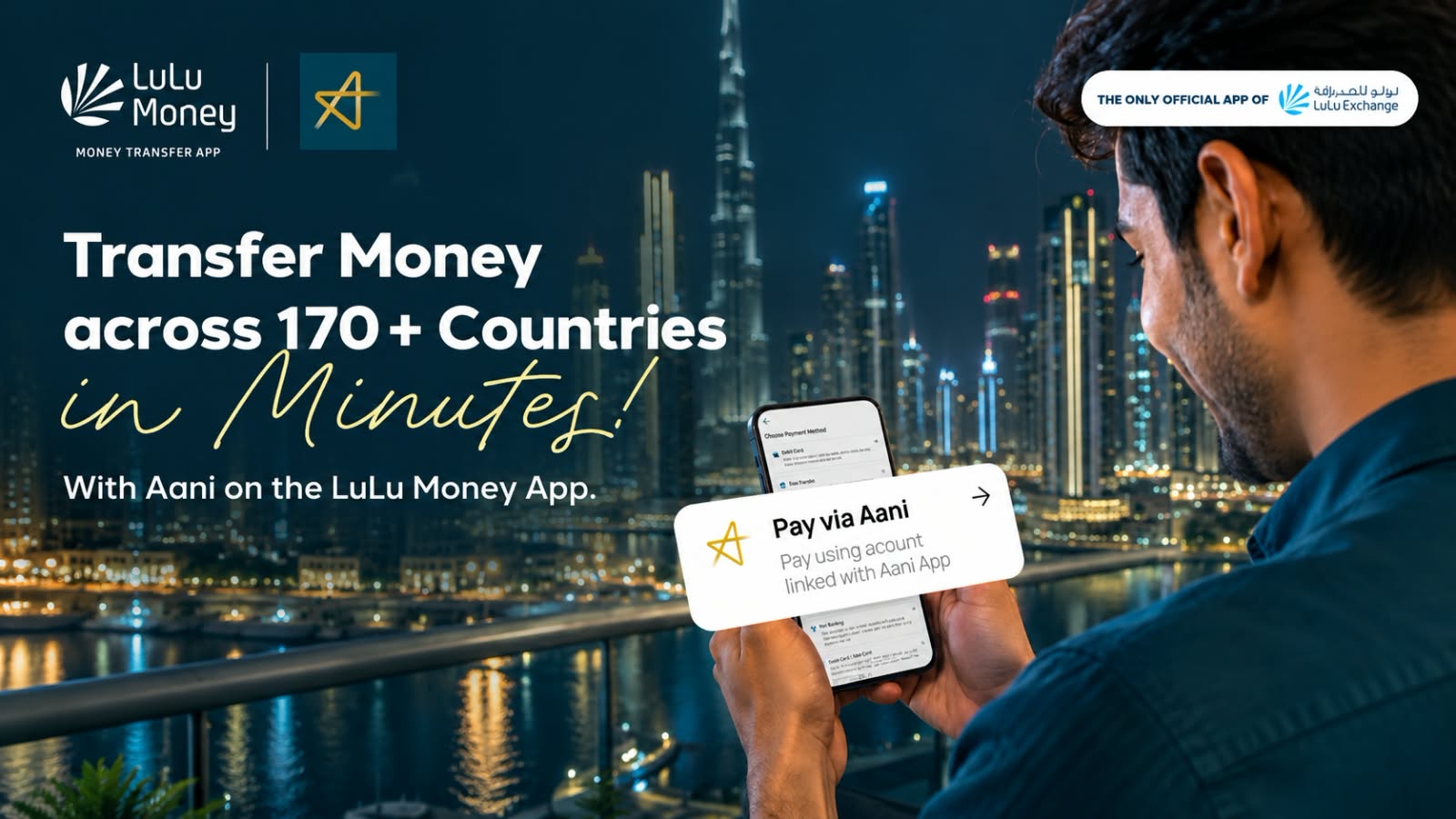
Aani is now available on the LuLu Money app. LuLu Money Card customers can enrol and send money within the UAE using a recipient’s mobile number or IBAN. If you’re sending money abroad through LuLu Money, you can also choose Aani as the payment method.
Read more: What is Aani? How to Use Aani on the LuLu Money App.
When Should You Opt for a Wire Transfer?
Use a wire when the amount is large, or the deadline is tight. Wires work well for:
- Buying or selling property
- Paying overseas suppliers
- Business deals and acquisitions
- Sending a large sum abroad
- Urgent payments that must clear fast
- Tuition payments. (See: What is the best way to pay university fees abroad?)
For smaller or routine payments, cheaper options often make more sense.
Pros and Cons of Wire Transfers
Pros
- Fast, especially domestically
- Handles large sums
- Works across borders
- Tracked, and cannot start until funds are available
Cons
- Fees can be high
- Hard to reverse
- Daily limits may apply
- Intermediary charges can be unpredictable
Bank Wire Transfer vs Remittance App: What’s the Difference?
For regular family remittances, a money transfer app is usually quicker and simpler. A wire suits large, one-off payments.
| Bank Wire Transfer | Remittance App | |
| What it is | Bank-to-bank payment, usually over SWIFT | Digital money transfer service run by a licensed provider |
| Best for | Large, formal or one-off payments | Regular transfers to family and friends |
| How you send | Bank app, online banking or branch | Remittance app |
| Details needed | Bank name, SWIFT code, IBAN or local bank code | Recipient’s name and payout details |
| Payout options | Bank account | Often bank deposit, cash pickup, or mobile wallet, depending on the country |
| Speed | Often a few business days | Often minutes, depending on provider and payout method |
| Cost | Bank fee, plus possible intermediary charges | Charges usually shown before you confirm |
Send Money Home with the LuLu Money App
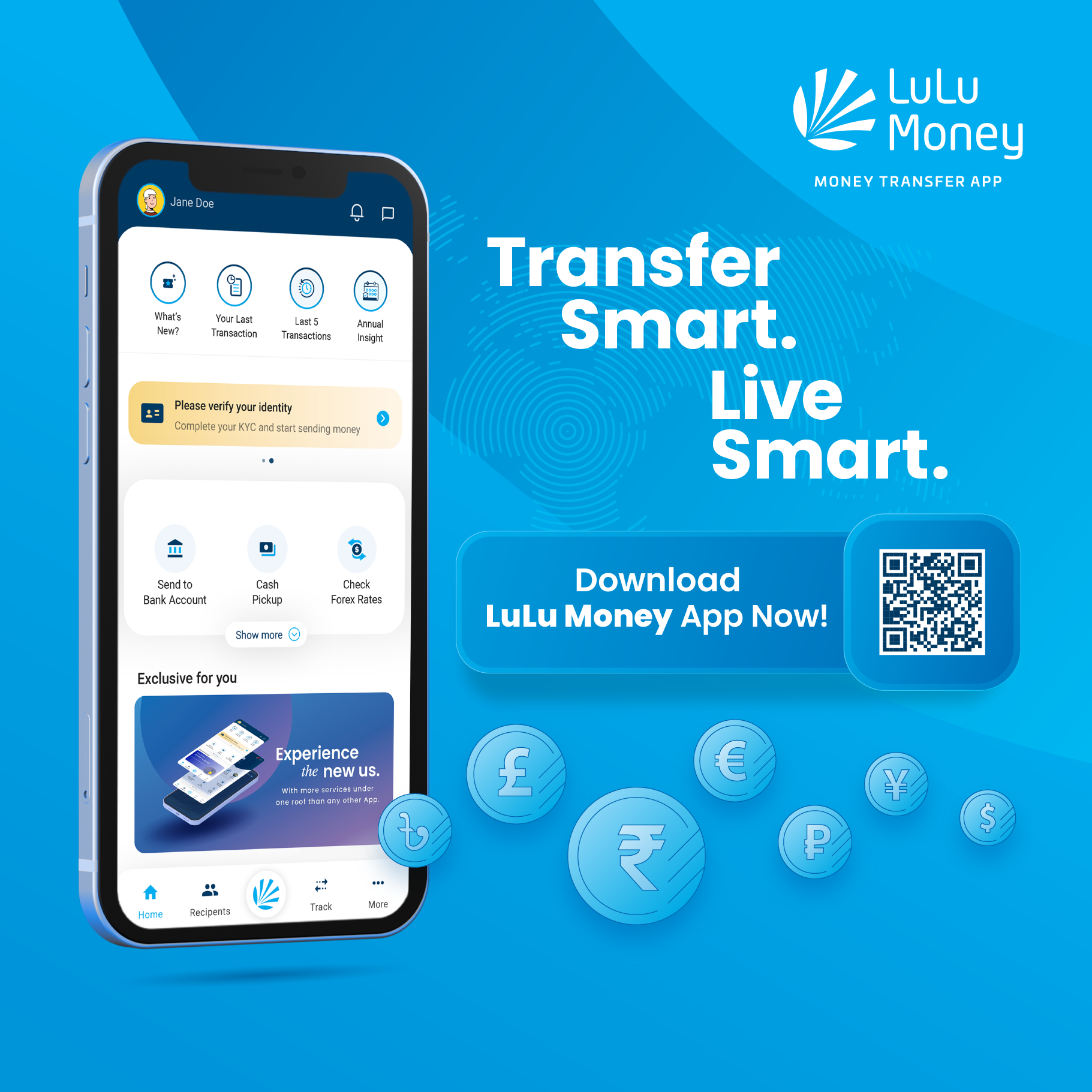
Not every transfer needs a wire. If you are sending money to family in India, Pakistan, Bangladesh, Nepal, the Philippines, Egypt or Sri Lanka, the LuLu Money app is built for exactly that.
- Send to 170+ countries from your phone
- Money delivered within minutes
- Bank deposit, cash pickup, and mobile wallet options for selected countries
- Free transfers on selected popular corridors for a limited time
- Backed by 170+ LuLu Exchange branches across the UAE
LuLu Money currently charges no transfer fee for transfers to India, Pakistan, the Philippines, Bangladesh, Nepal, Egypt, and Sri Lanka. If you are sending money to these corridors, send now for zero fee.
New to the app? Read Why is LuLu Money the most trusted app in the UAE?, or explore our LuLu Money app page.
Bottom Line
A wire transfer is a dependable way to move large sums between banks, in the UAE or overseas. Know the details you need, understand the fees, check cut-off times, and verify every instruction. For everyday remittances, the LuLu Money app gives you a faster, simpler way to send money home.
FAQs
Is a wire transfer the same as a bank transfer?
Broadly, yes. The terms are often used interchangeably for electronic bank-to-bank payments.
Do I need a SWIFT code for wire transfers from the UAE?
For international bank wires, yes. For domestic transfers, your bank will ask for the recipient’s IBAN.
Can I send money without a bank account?
Yes. Licensed exchange houses like LuLu Exchange offer options such as cash transfers, so a bank account is not always needed, while apps like LuLu Money offer transfers to a mobile wallet or cash pickup.
What is the safest way to send money abroad?
Use a licensed provider, verify the recipient’s details, and never act on urgent, unverified payment requests.
Can I cancel a wire transfer?
Usually not. Once the recipient’s bank credits the funds, the payment is typically final. If you spot a mistake or fraud, contact your bank immediately. Some wires can be cancelled or recalled if you act within the bank’s time limit, but there is no guarantee.
Popular BLOG
October 21, 2026
What is Aani? How to Use Aani on the LuLu Money App

October 12, 2026
Send Money, Win an iPhone 18 Pro Max: LuLu Money SendFest is Here
November 4, 2026
What is a Wire Transfer and How Long Does It Take?

October 6, 2026
UTR Number: Everything You Need to Know

September 17, 2026
What is NRI? A Complete Guide for Indians Living and Working in the UAE
August 17, 2026
What is TAT? How LuLu Money Redefines Transfer Speed in the UAE

August 5, 2026
Why is August One of the Best Months to Send Money Home?

July 18, 2026
LuLu Exchange and LIVAN UAE Join hands for Channel 4 Radio’s Football Campaign

June 11, 2026
A Partnership Born from Shared Values, Timed for the World's Biggest Stage

May 29, 2026
What's the Best Way to Pay University Fees Abroad?
LuLu Money and Ding partner to offer international mobile top-up to
Subscribe Our
Youtube Channel

LatestBLOG
