



You’ve landed in Kuwait, the job is settled, and your first salary is on its way. Soon you’ll want to send part of it home, and that’s when you’ll run into three letters: KYC. For a newcomer, the rules around money transfers in Kuwait can feel heavy. In reality, they exist to protect your money, your identity, and your family at the other end.
KYC is the identity check that the Central Bank of Kuwait (CBK) licensed exchange company or money transfer app must complete before moving your money. Let’s learn more about the regulations you need to know in Kuwait.
Last updated: Law 106 (2013) & Instructions No (2/ES/507/2023). Rules change often, so confirm current requirements on the CBK website or with your provider.
Who Regulates Money Transfers in Kuwait?
The Central Bank of Kuwait is the country’s financial regulator. Under the CBK Law, the Bank is responsible for enforcing the laws and regulations on the transfer of funds. The same law restricts banking activity, and the acceptance of money for investment from the public, to institutions registered with the CBK. Violations carry penalties of up to two years’ imprisonment and fines of up to KD 100,000.
On top of this sits Kuwait’s anti-money laundering and counter-terrorism financing law. The CBK has been enforcing it firmly: in 2026 it penalised several exchange companies after inspections found AML/CTF failings, and ordered them to strengthen customer due diligence and monitoring.
What this means for you: Only a CBK-licensed provider is a safe route for sending money abroad.
Also Read: Money Transfer Fraud in Kuwait: The Warning Signs Every Expat Should Know
What Is KYC, and Why Does It Apply to You?
KYC (Know Your Customer) is the identity verification process that licensed banks, exchange companies, and money transfer apps must complete before they handle your money.
It confirms who you are, where you live, and that your funds come from a legitimate source. It is not a sign that something is wrong. Every resident, from first-time expats to long-term residents, goes through it. Your provider may also ask you to re-verify or update your details from time to time.
What You’ll Need as a New Expat
- A valid Civil ID. Residents are verified with their Civil ID, so the first step after arrival is getting yours issued.
- Your passport. Local guidance advises expats to keep their passport or Civil ID on them at all times.
- A registered mobile number for OTP and app verification.
The Kuwait Mobile ID, set up on your phone (more below).
Your first steps:
1. Get your Civil ID issued.
2. Set up Kuwait Mobile ID on your phone. Residents who already hold a physical Civil ID card can create the digital version in the app.
3. Register on the LuLu Money app and complete KYC.

Kuwait Mobile ID: Now Mandatory for Online Transfers
Since April 2026, the CBK has required exchange companies to verify customers through the Kuwait Mobile ID (also called Hawyti, run by the Public Authority for Civil Information) for online international transfers, and to document each verification. The app works as a digital Civil ID and ties your transfer to your own phone, which makes it much harder for someone else to move money in your name.
Security tip: Never approve a Kuwait Mobile ID request that you did not start yourself. If an unexpected approval request appears, decline it and contact your provider.
Source of Funds: Why You May Be Asked “Where Is This Money From?”
Exchange companies have tightened source-of-funds checks. Customers may need to provide proof when a transfer is well above the income declared in their KYC profile, or when similar transfers repeat frequently. Accepted proof can include savings shown on bank statements, proceeds from an asset sale, a loan, or end-of-service benefits, along with a clear explanation of your relationship to the recipient.
Two practical points for first-time senders:
The CBK lowered the maximum daily cash accepted for transfers from KD 3,000 to KD 1,000 per customer, which makes digital transfers the simpler route.
These checks don’t cap how much you can send. They simply require you to show your money is legitimate. Keeping your salary credited to your bank account makes this far easier.
Tips to avoid delays
– Enter your recipient’s name exactly as it appears on their ID or bank account.
– Keep proof of funds ready for larger transfers.
– Keep your salary credited to your bank account.
Also read: Top Payment Methods in Kuwait: A Complete Guide
Send Money From Kuwait With LuLu Money
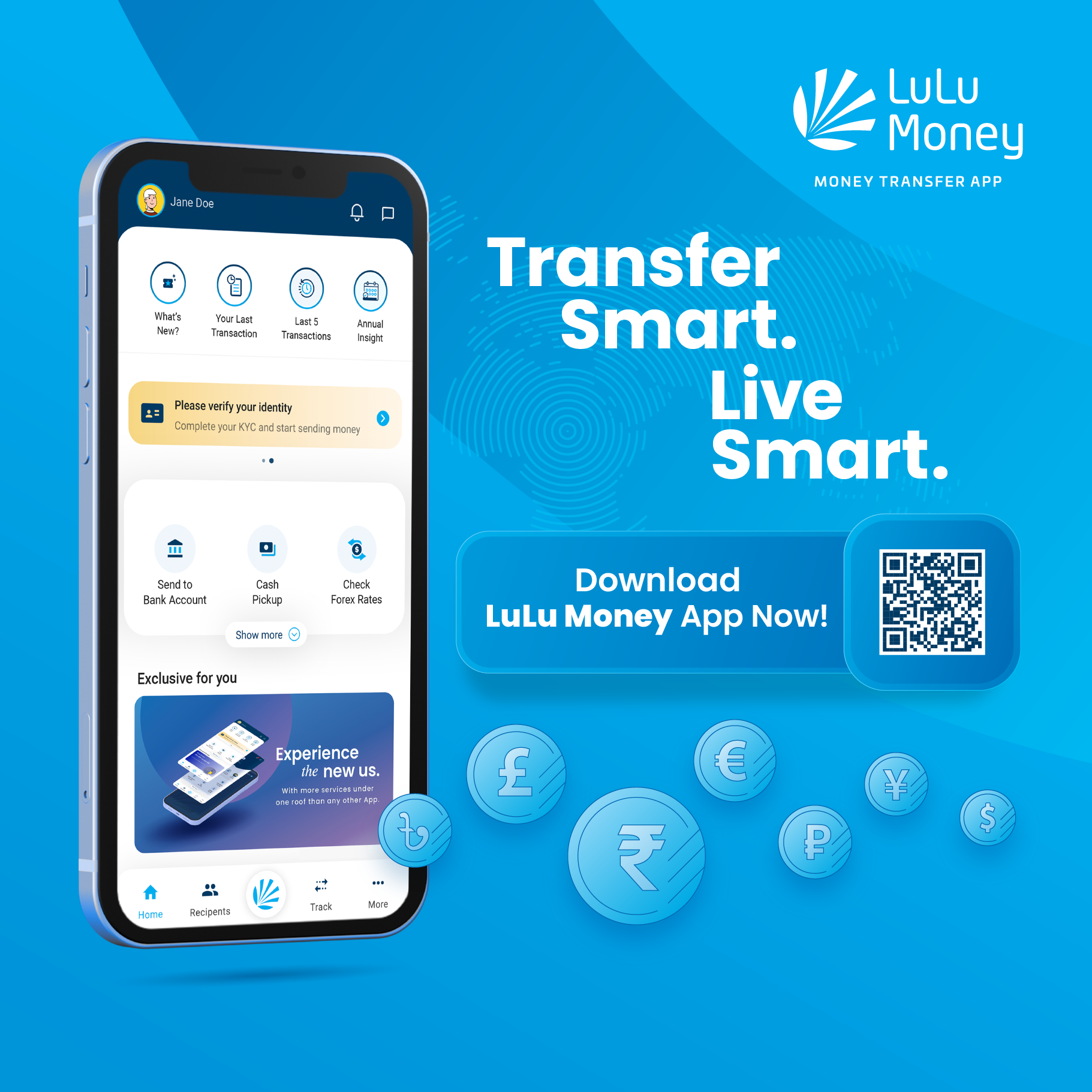
For a new expat, the easiest way to stay on the right side of every rule above is to use a CBK-regulated money transfer app that builds KYC into the sign-up. That’s LuLu Money App.
LuLu Exchange is licensed by the Central Bank of Kuwait and LuLu Money is the official app of LuLu Exchange.
Ways to send money with LuLu Money App:
- Bank account transfers
- Mobile wallet transfers
- Cash pickup
Services and features:
Quick, guided KYC with Kuwait Mobile ID verification inside the app
170+ countries covered, including India, the Philippines, Bangladesh, Nepal, Sri Lanka, Egypt, and more
Live exchange rates shown before you confirm
LuLu Money Rewardz: earn reward points and redeem them as rewards to save on shopping
24×7 customer care, plus a firm no-links policy: we contact prize winners only through verified social media accounts or direct message

How to download and send your first transfer
- Download the LuLu Money App
- Register with your mobile number and complete KYC using your Civil ID and Kuwait Mobile ID.
- Add your recipient’s details and choose a payout method.
- Check the live rate, confirm, and send.
- Track your transfer in the app.
Ready to send money home?
Download the LuLu Money app and complete your first transfer in minutes.
Frequently Asked Questions
What is KYC for expats in Kuwait?
KYC is the mandatory identity verification that CBK-regulated exchange companies and money transfer apps complete before processing your transfer.
Is the Kuwait Mobile ID mandatory to send money online from Kuwait?
Yes. Since April 2026, the Central Bank of Kuwait requires licensed exchange companies to verify customers through Kuwait Mobile ID for online international transfers.
What documents do I need for sending money from Kuwait as a new expat?
A valid Civil ID is the core document, along with your passport and a registered mobile number. For larger or unusual transfers, you may also be asked for bank statements or other proof of your source of funds.
How do I check if a money transfer provider is licensed in Kuwait?
Check the CBK website to confirm whether the provider is supervised by the Central Bank of Kuwait.
Are there limits on how much I can send from Kuwait?
The CBK reduced the daily cash amount accepted for transfers to KD 1,000 per customer. Sending larger amounts digitally is possible, provided you can document the legitimacy of the funds if asked.
Will I need to do KYC again?
Possibly. Providers may ask you to re-verify or update your details from time to time.
Popular BLOG
November 18, 2026
Understanding Central Bank of Kuwait Regulations & KYC for First-Time Expats

October 19, 2026
Pasban Remittance Reward Scheme: Win up to PKR 100 Million
October 6, 2026
Money Transfer Fraud in Kuwait: The Warning Signs Every Expat Should Know

September 23, 2026
Why Kuwait's Exchange Market Keeps Growing: The Shift to Online Money Transfers
May 8, 2026
Top Payment Methods in Kuwait: A Complete Guide
May 4, 2026
Best App to Send Money From Kuwait to India
April 13, 2026
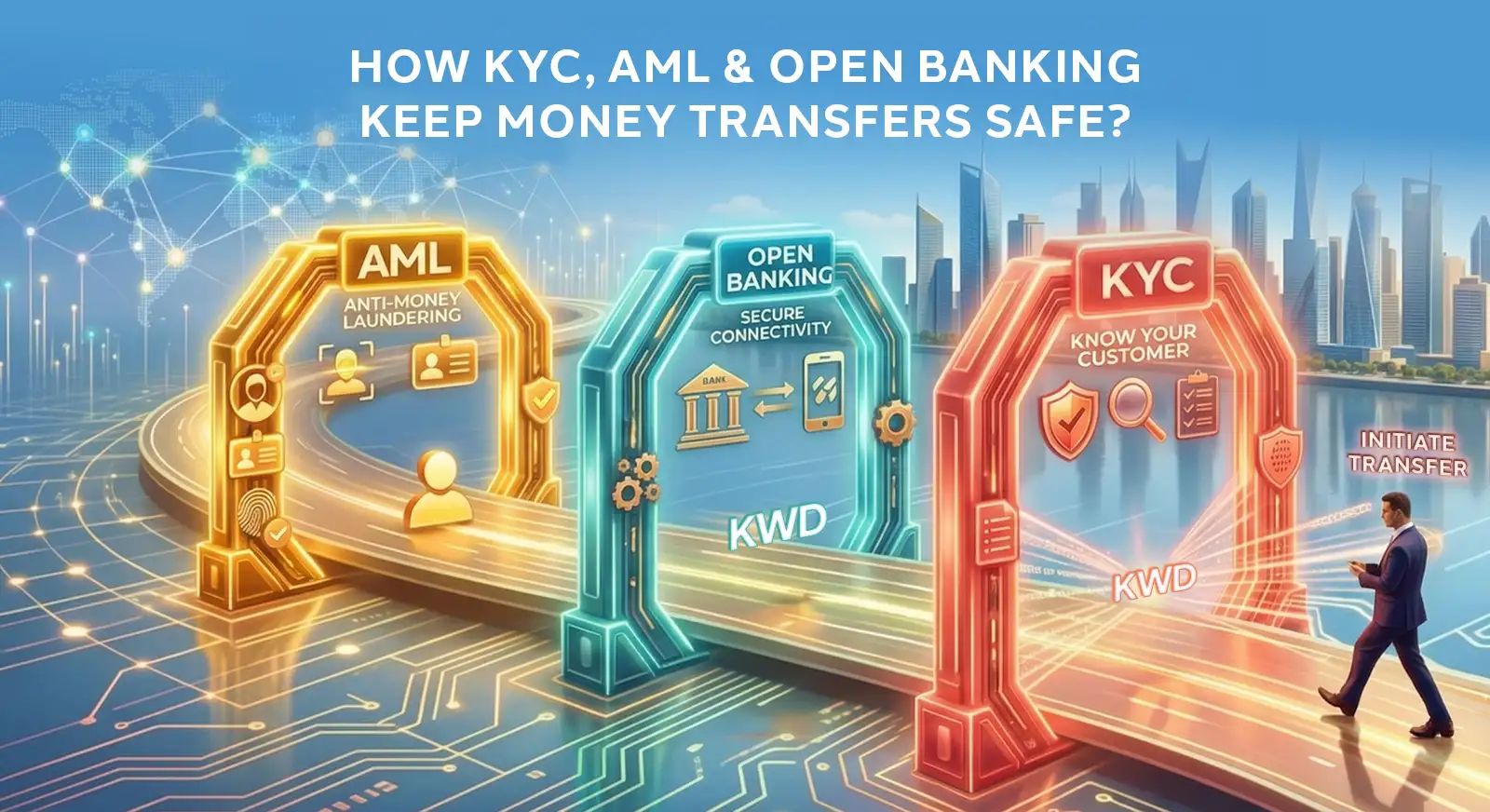
How KYC, AML & Open Banking Keep Money Transfers Safe?

March 26, 2026
War and Money: How War Affects Financial Industries?
March 23, 2026
Egypt Wallet Transfers are LIVE on LuLu Money

March 10, 2026
Beyond Distance: How Digital Remittances Change Eid for Expats
Subscribe Our
Youtube Channel

LatestBLOG
 Get the App
