


Financial inclusion remains the first step towards personal and business well-being and is a pre-requisite to meet several goals under the UN’s Sustainable Development Goals.
Despite this, over half the world is yet to gain equitable access to finance and this remains one of the biggest challenges facing the world today.
The World Economic Forum, which is driving forward the agenda of stakeholder capitalism, has consistently focused on financial inclusion and the role it plays in helping communities thrive.
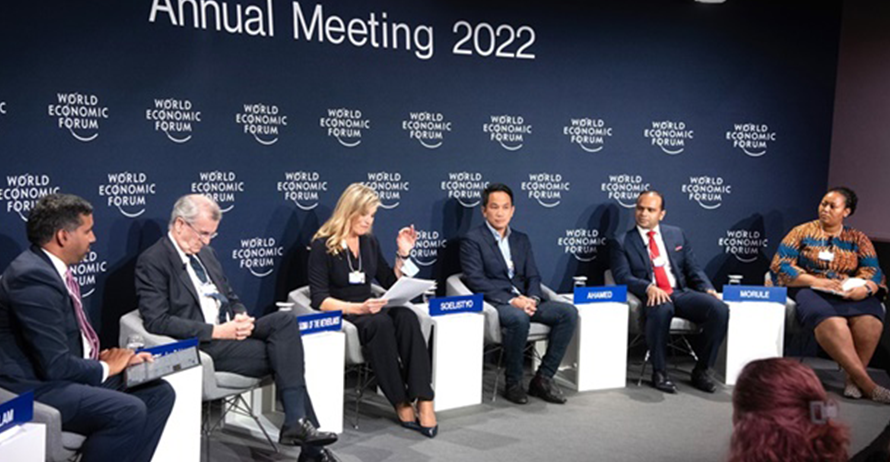
This all-important topic was a subject of discussion on the second day of the ongoing WEF at Davos, with several global stakeholders convening to discuss this issue.
Queen Máxima of the Netherlands opened the session raising a question on the need for public and private stakeholders to fully understand the purpose of financial inclusion and evaluate how it can result in better financial health of an individual.
Karabo Morule of Capital Art, South Africa, brought up the subject of financial literacy as a key element of driving better use of access to finance. Her call for financial literacy finds relevance in various research studies which show a significant correlation between financial inclusion and financial education. In fact, developing countries today report a financial literacy level of as low as 30% compared to the average of 60% in developed economies.
Against this background, Morule spoke of how financial literacy would encourage people to invest in insurance, especially among the underprivileged and marginal groups.
Her thoughts on connecting the underprivileged with prudent products was echoed by Adeeb Ahamed, whose company, LuLu Financial Holdings, is involved in the cross-border remittances and micro-loans segment.
With over 1.1bn people worldwide locked out of formal financial channels due to lack of a verifiable identity, Adeeb Ahamed took the examples of India’s Aadhar scheme and UAE’s Wage Protection Scheme to drive home the need for better traceability of consumer spending.
According to him, this is important to complement awareness about products suited to the needs of the under-served. Adeeb also suggested that while digitisation has its inherent benefits, financial institutions should remember the emotional aspect at the grassroots level and accordingly bring in a personalised touch to their services to ensure last-mile consumers are onboarded efficiently.
Gelsomina Vigliotti of the European Investment Bank, which works with several developing economies on grassroots level projects, further mentioned that access to finance should come with adequate skill training and development so that the money is utilised properly.
Merely gaining financial access doesn’t guarantee growth but having a strong business case to deploy it makes the difference, she added.
Andre Soelistyo of GoTo Indonesia asked for greater public-private involvement to drive down the cost of moving money to zero. According to him, this is necessary to build sustainable solutions that can get people to utilise financial products suited to their well-being. He spoke of how his company was able to leverage the potential of digital solutions during the pandemic to onboard millions of motorbike riders in Indonesia, thereby giving them access to the market opportunity.
Central to this point of digitisation, the conversation also touched upon various aspects of cyber fraud, especially with digital newbies having little awareness of the security involved. Globally, cybercrime is up by 600% as more people move online, with 67% of financial institutions reporting an increase in cyber-attacks over the past year.
Against this backdrop, François Villeroy de Galhau, Governor of the Bank of France, admitted that while this is a concern, there should not be a trade-off between digitisation and regulation in the march towards greater financial inclusion. He expected stakeholders to work together so that both grow in tandem with the demand.
He was also vocal about the need to bring in gamification elements into financial literacy campaigns, suggesting strongly that financial literacy cannot be done in isolation.
The conversation, which was moderated by Faisal Islam, Economics Editor, BBC, also touched upon several successful case studies from developing economies such as the UAE, India, Bangladesh, Indonesia and South Africa among others.
Main Category: News
Financial inclusion can never be complete without taking in the ‘unidentified’
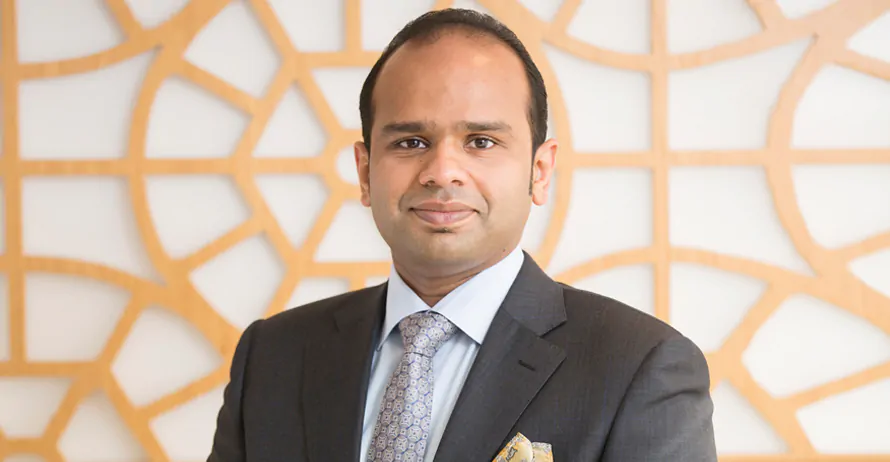
While at the World Economic Forum this week, I’ve been part of conversations calling for greater government intervention in achieving financial inclusion. Two years into this decade of rampant digitization, I have to admit that governments have actually been quite proactive in easing regulations and enabling a favorable environment for businesses to thrive.
The inevitable question arises: What more can private stakeholders do then to ensure equitable access to finance? Financial inclusion is not merely onboarding the underserved to formal banking channels, but ensuring easier access to finance whenever one needs and having the necessary skills and knowledge to multiply it for further wellbeing. In this regard, let’s for a moment step back and consider the first and most challenging step for financial inclusion today: lack of verifiable identity.
According to the World Bank, more than 1.1 billion people globally live without an identity proof. In South Asia alone, 32 per cent of the population (approximately 350 million people) do not have an official identity. In sub-Saharan Africa, 46 per cent of the population (approximately 500 million people) do not have an official identity.
Without verifiable identities, financial institutions cannot onboard these populations. An individual’s verifiable identity thus becomes a critical factor to get them even remotely close to formal financial channels. There are developing nations that have successfully achieved this: the UAE’s Emirates ID and India’s Aadhar scheme are perfect examples.
Fintechs can help out
Until these regulated identities are more widespread, there is the availability of social data being used by fintechs and NBFCs which need to be explored further. This alternative data uses a risk-based KYC approach, or to put it simply a ‘Know Your Customer Better’ approach.
In this process, some basic information is collected from the customer, and they are given access to smaller funds at first. As their credit score improves, more information is collected, and the lending amount is gradually increased. This is the model of microfinance, which has been a life-saver in many developing economies.
Standardizing this alternate data across different jurisdictions is what is important in today’s age, to ensure uniformity of assessment and identification of the underserved. For ultimately, getting the underserved into formal banking channels requires that they have access to finance.
Banks can lend a hand
Which brings us to how legacy institutions can tap into this data to realize financial inclusion. This is where the private-private collaboration comes into play.
Larger banks have their own due diligence and processes to follow, but by partnering with regional fintechs and NBFCs in some economies, banks get to tap the grassroots without taking on the risk entirely.
Banks bring with them capital, infrastructure and expertise. Regional institutions bring with them a pulse of the people with their localized/on-ground expertise. For example, in India, it’s nearly impossible for the larger banks to reach the remotest corners of the country. The regional NBFCs, as well as some of the new-age fintechs and banking correspondents though, have a good reach among the grassroots.
Greater partnership between these private stakeholders of the financial services ecosystem will ultimately lead to faster penetration of quality services in a regulated manner. When the private sector converges thus, government intervention can be reserved to the core areas, without either having to do a trade-off on the pace of digital inclusion.
Financial inclusion today defines the state of an economy. Governments are active participants in improving regulations, conducting financial literacy programmes, upgrading infrastructure and what not. If the vision remains to make people’s lives better, then it is the private sector’s responsibility to band together and conjoin the pieces of the puzzle.
Ghanaian mechanic wins Tesla Model 3 in LuLu Exchange mega draw

Abdul Gani, a resident of the UAE who hails from the town of Drobo in Ghana and a mechanic at Al Khaleej Automobiles in Muweilah, Sharjah, is now the proud owner of a brand-new Tesla Model 3 car. Gani won the car as a part of the mega draw of LuLu Exchange’s ‘Send Smart Win Smart’ contest. Gani, who initially came to the UAE in 2019 had to return to Ghana that year itself, due to a lack of better opportunities. He got second-time lucky upon returning in March 2021 and eventually found a job with his present employer. A regular customer of LuLu Exchange, Gani conducted eight transactions during the campaign period from September 1 to December 31, 2021. The draw was open to all customers in the UAE who transacted either via the company’s branches or its digital offering, LuLu Money. Gani leads a pack of 1000 other winners who won various gifts including up to two kg gold and gift vouchers worth Dh250,000, in the four months. Commenting on the successful conduct of the campaign, Thampi Sudarsanan, AVP of LuLu International Exchange, said: “We are thrilled to have been able to recognise 1000 winners from different nationalities in the UAE. We convey our warmest congratulations to the winner. I am sure this would change his life for the better.”
“We assure you to return with the bigger rewards in 2022 while continuing to strengthen the quality of our services and offerings for the benefit of our trusted consumers,” Sudarsanan concluded.
The full list of winners of the Send Smart Win Smart campaign for 2021 can be found on this link: https://luluexchange.com/ssws21/
Adeeb Ahamed of LuLu Financial Holdings nominated to Emirates Board of Directors for Overseas Investors at IIC
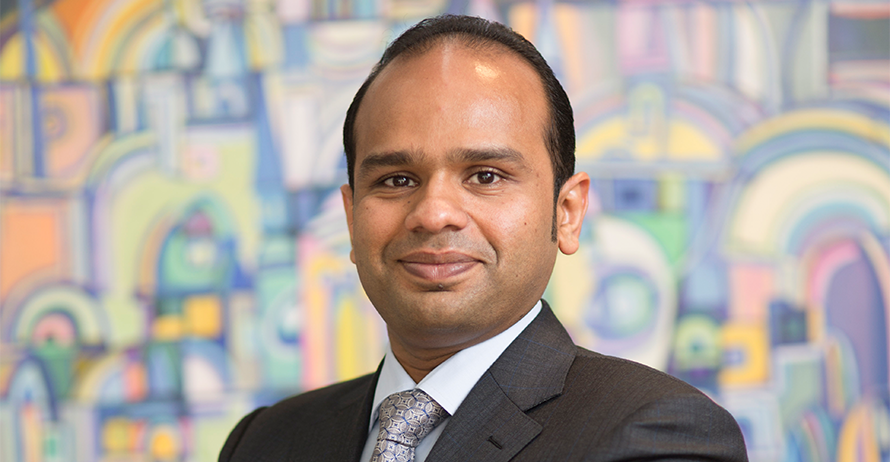
As part of its efforts to bring new perspective to its economic vision for the UAE, the UAE International Investors Council (IIC) has announced the nomination of Adeeb Ahamed, Managing Director of Abu Dhabi based LuLu Financial Holdings (LFH), as an Independent Member of the Emirates Board of Directors for Overseas Investors.
Founded in 2009, the IIC comes under the ambit of the Ministry of Economy, with Abdulla Bin Touq Al Marri, UAE Minister of Economy, as its Chairman. The Council was formed with a vision to act as a link between UAE international investors and the government to enhance competitiveness of UAE international investments and to overcome all types of challenges.
Speaking about his nomination, Ahamed says, “I am honoured to be chosen to play a key role in the UAE’s economic development. The UAE has shown amazing resilience and innovative governance during the time of the pandemic and new perspectives will help to reinforce the country’s foreign investment outlook. As a proud resident of the UAE, it is my privilege to contribute to the development of this nation and I look forward to working with fellow members of the IIC.”
Ahamed, who also helms the hospitality investment company Twenty14 Holdings, brings to his appointment considerable global and regional advisory experience. He is a member of the Advisory Boards of the Al Maryah Community Bank UAE, the Regional Strategy Group of the World Economic Forum and the World Tourism Forum, Lucerne.
His financial services company operates a network of over 245 physical branches across 11 countries, including 83 branches of LuLu Exchange in the UAE and the digital payments product, LuLu Money.
LuLu Exchange inks agreement with Indian government’s global skill development program
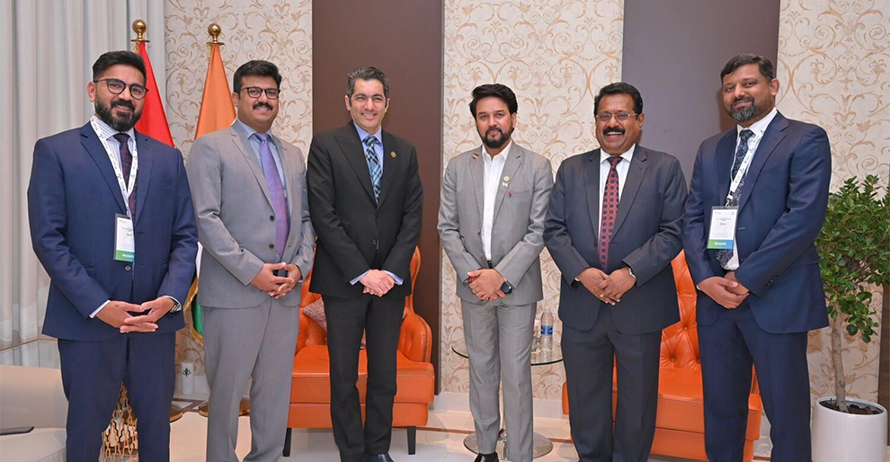
LuLu International Exchange has inked an agreement with NSDC International, a newly formed subsidiary of National Skill Development Corporation of India, for the latter’s Project Tejas (Training for Emirates Jobs and Skills), at a ceremony held in Dubai on Sunday.
Attended by senior government officials and business leaders, including Dharmendra Pradhan, Minister for IT & Skill Development & Entrepreneurship; Anurag Thakur, Minister of Sports, Youth Affairs and Information and Broadcasting; and Aman Puri, Council General of India; Project Tejas aims to provide high-quality skills as per global standards, to enable certified workers to work in UAE and GCC countries.
Launched in line with the Skill India Mission, Project Tejas will help boost international mobility of the skilled Indian workforce, with a target to train, certify and place 10,000 Indian workers and professionals internationally.
LuLu Exchange, which is among the leading cross-border remittances and foreign exchange companies in the UAE, has committed to ensure that skilled Indians get placed across its network of 83 branches in the country, in frontline consumer-facing positions.
Speaking on the sidelines of the signing ceremony, Thampi Sudarsanan, AVP, LuLu Exchange, said access to industry-ready human resources is going to be a challenge in a highly digitised world, and NSDC International’s efforts to upskill professionals is a step in the right direction.
“We are proud to partner with this innovative project that will help skilled Indians find a job worthy of their education and training in the UAE. The UAE is fast emerging as a financial services hub for the GCC and larger Mena region. Making available qualified professionals augurs well for the growth of the payments ecosystem here and will surely enable existing & new companies to grow strongly,” he said.
At the launch event, NSDC International recognised workers trained through the program and deployed in the UAE, who are presently working in diverse sectors such as construction, facility management, healthcare, hospitality, automotive, IT, banking and financial services.
InsuranceMarket.ae and Lulu Exchange announce a ‘pearl’ of a partnership
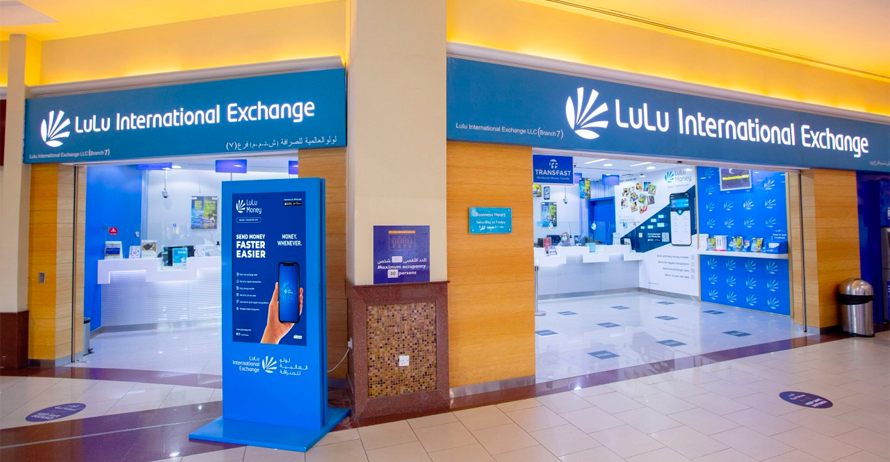
Making the most of your money is a concern for everyone these days, so we were excited to hear about InsuranceMarket.ae’s exciting new strategic partnership with LuLu Exchange.
Keen to know more, we asked executives from the two companies to tell us about their agreement. Avinash Babur, CEO, InsuranceMarket.ae, said: “Our aim has always been to add value for our customers, and by partnering with similarly high calibre, blue-chip brands, we’re able to offer not only the best insurance in the market but also market-leading offers on a variety of products and services. There’s great synergy between ourselves and LuLu Exchange so we’re excited to partner with them.”
Grishma Apte, general manager, myAlfred, said: “Through this partnership of Lulu Exchange and myAlfred, our customers are able to get a LuLu Hypermarket gift voucher worth Dh50 to spend how they like, when they download and make their first transaction through the Lulu Money app. And for all Lulu Exchange Gold Card, Lulu Money and My Pay card Lulu Exchange customers, they can enjoy a fantastic 10 per cent discount worth up to Dh200 on any car or home insurance product purchased through InsuranceMarket.ae.”
Talking about the partnership, Thampi Sudarsanan, AVP, LuLu Exchange, said: “We are delighted to partner with the UAE’s leading online players to bring our digital cross-border solution closer to their customers. ‘myAlfred’ and ‘InsuranceMarket.ae’ are digital-first brands with an eye on unmatched experience and benefits for online users, and by partnering with them, we look to broaden the scope of benefits offered to our customers in their digital journey with LuLu Money.” Sounds like we’ve revealed a pearl of a partnership, and with this offer starting from May 1, you can enjoy valuable savings just in time for Eid.
LuLu Exchange launches festive cashback campaign for customers
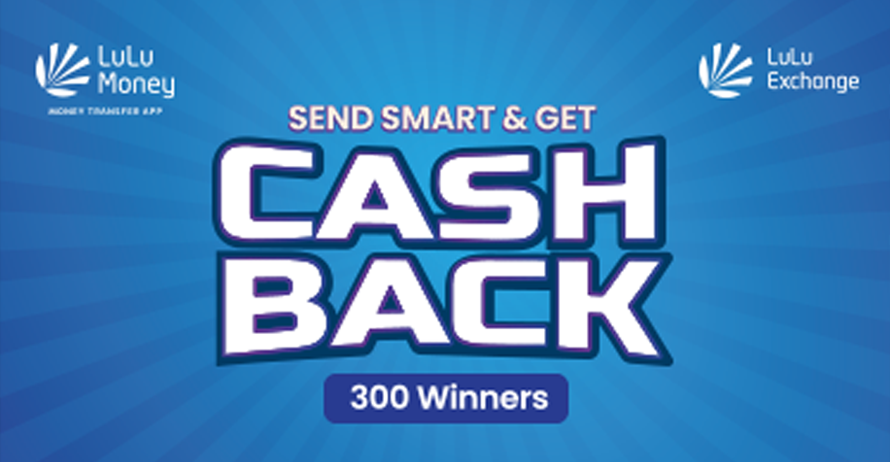
With a little over a week left for the holy month of Ramadan to commence, LuLu Exchange has rolled out an exciting new campaign for the festive season. Slated to run from 25th March to 23rd May 2022, the Send Smart & Get Cash Back promotion is open to all customers who transact via any of the 83 branches of LuLu Exchange or through the LuLu Money transfer app in the UAE.
The e-raffle draw will select 300 winners over the two-month period, with winners eligible for 100% cashback rewards. To be enrolled into the e-raffle draws, customers need to make a minimum of two money transfers within the scheduled periods. Those making higher number of transactions will have higher chances to win, with the minimum money transfer amount pegged at AED 100. The company has fixed the upper limit of cashback prize at 3000 AED.
The promotion eligibility will be based on a successful credit of the customer’s remitted amount. Cancelled, returned or void remittance transactions will not be eligible for the promotion.
The eligibility periods are as follows:
Eligibility Periods: March 25 – April 8 | Draw date: April 11 | Number of winners: 75
Eligibility Periods: April 9-23 | Draw date: April 25 | Number of winners: 75
Eligibility Periods: April 24 -May 8 | Draw date: May 11 | Number of winners: 75
Eligibility Periods: May 9-23 | Draw date: April 25 | Number of winners: 75
For more details about the promotion, visit the LuLu Exchange social media pages or call 600522204
LuLu Money announces a collaboration with Network International
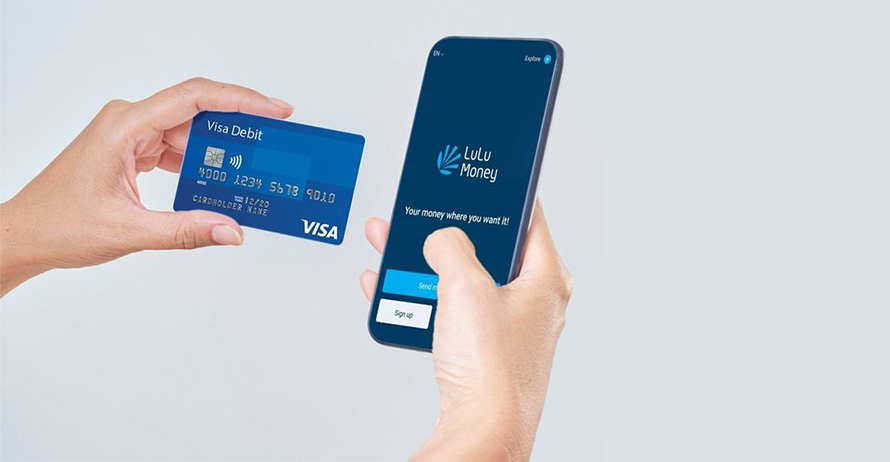
LuLu International Exchange – one of the leading payment service providers in the UAE, has entered a strategic collaboration with Network International – the leading enabler of digital commerce across the Middle East and Africa (MEA), and global payments technology leader, Visa, to enable users to remit digitally on the LuLu Money payments app using Visa debit cards.
Through this partnership, Lulu Exchange aims to drive convenience and ease of money transfer for millions of people in the UAE holding a Visa debit card. The transactions conducted through the LuLu Money app will carry no additional charge or hidden fee and will offer industry-leading processing time at the highest level of service quality.
Talking about the partnership, Mr. Richard Wason, CEO, LuLu Financial Group, said, “The payments ecosystem in the UAE is advancing rapidly, and in this context, creating easier touchpoints for users to conduct their transactions online will go a long way in building trust. As an active participant of the UAE’s payments ecosystem, we see our partnership with Visa and Network International as a meaningful collaboration that can drive greater financial inclusion.”
Shahebaz Khan, Visa’s General Manager for UAE, Bahrain, and Oman, said: “We are delighted to partner with Lulu International Exchange to help meet UAE consumers’ increasing expectations for a more seamless and secure way to move funds. With Visa’s Account Funding Transaction service, Lulu Exchange customers holding a Visa debit card can use their debit cards to fund their remittance transactions from their phone in near real time and with the peace of mind of knowing that it’s also secure.”
Andrew Key, Group Managing Director – Acquiring, Network International, added, “As consumers increasingly turn to contactless channels for their payment needs, we are pleased to collaborate with Lulu International Exchange, as its exclusive partner, and Visa to bring digital innovation in the remittances space. LuLu Exchange’s customers who are Visa debit cardholders can now transfer funds quickly and securely via their mobile apps. We look forward to supporting regional exchange houses looking to digitalize their remittances offering while keeping costs low.”
The new service is presently limited to Visa debit cards issued by select UAE banks, with wider coverage expected to be rolled out by the first half of the year.
Lulu Exchange partners with Magnati to facilitate DWallet cards
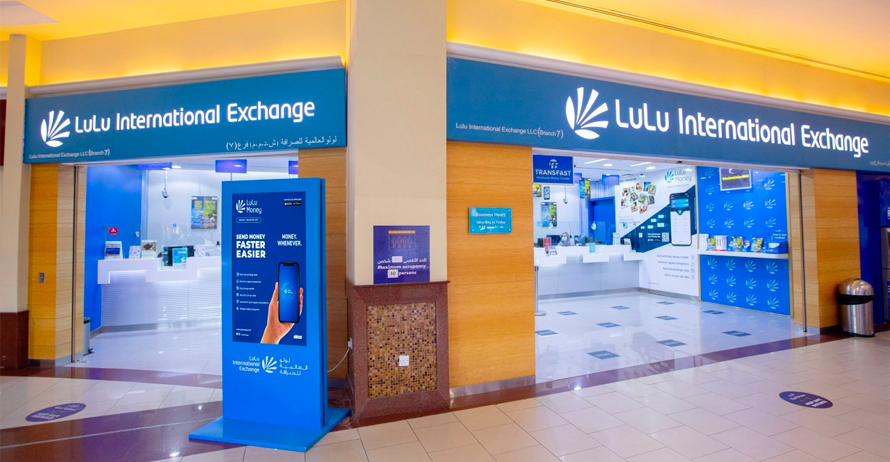
LuLu International Exchange – one of UAE’s most prominent financial services provider, has partnered with Magnati – a fully owned subsidiary of First Abu Dhabi Bank (FAB), to launch the DWallet Card Payment Service for UAE citizens and residents.
As a part of the service, sponsors of domestic workers can now transfer their domestic worker’s salary to their DWallet prepaid card through any of the 83 branches of Lulu Exchange, which will help facilitate payment and top-ups for the cards. The partnership expands DWallet’s network of participating entities and improves convenience for sponsors making salary transfers.
DWallet is an initiative between the Ministry of Human Resources & Emiratization (MOHRE), First Abu Dhabi Bank (FAB) and Magnati to provide a unified payment solution to domestic workers. The solution is designed to facilitate monthly salary transfers and ensure domestic workers across the UAE are paid in a transparent and cashless manner wherein earnings are deposited directly into their cards.
Talking about the rollout of the service, Richard Wason, CEO, LuLu Financial Group said, “LuLu Exchange values the payment needs of all its consumers and remains committed to building upon collaborative partnerships that can aid financial inclusion for all sections of society. From being the first exchange house to integrate the UAE’s Wage protection Scheme, to launching globally accepted payment methods on our digital platform LuLu Money, we aspire to innovate value and inspire experiences to help the payments ecosystem achieve its true potential.”
Talking about the partnership, Enaz Ebrahim, Managing Director & Head of Consumer Payment Solutions, Magnati said, “Magnati is committed to provide consumers with convenient and secure payment solutions, and our partnership with LuLu Exchange allows us to deliver another financial inclusion solution for the benefit of society. We’re excited to partner with a leading financial services provider to expand DWallet’s offering and provide the sponsors with additional options to top-up the DWallet card, while advocating for increased participation of new segments in the financial sector.”
LuLu Exchange opens 84th branch in the UAE at Al Dhaid, Sharjah
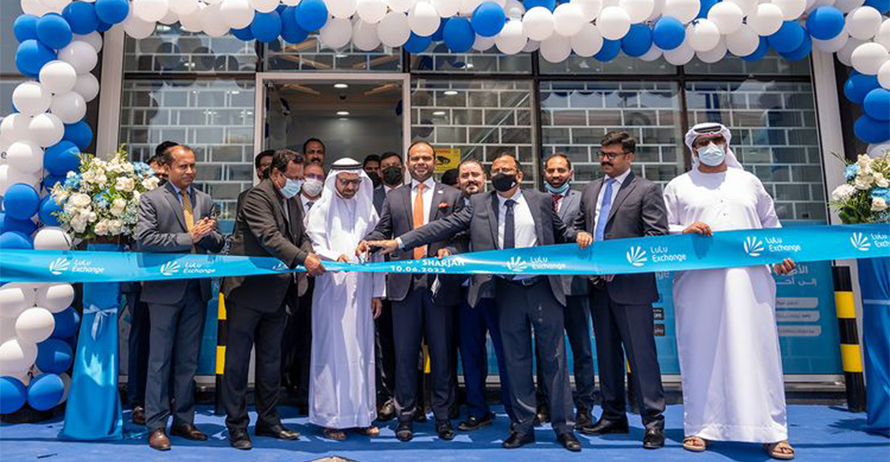
LuLu International Exchange – one of UAE’s leading cross-border payments and money exchange companies, has opened its 84th branch in the country at Al Dhaid in Sharjah. With this opening, LuLu Exchange has given a fillip to its intention to aggressively diversify its network and reach a larger cross-section of the nation’s population.
The branch was inaugurated by Adeeb Ahamed, MD, LuLu Financial Group, in the presence of other senior management, as well as dignitaries from the UAE’s payments ecosystem. The opening also marks the 249th Global Branch of the LuLu Financial Group, of which LuLu Exchange is part of.
Talking about the company’s ongoing growth strategy, Ahamed, said, “The UAE is our most widely networked market and today’s opening further establishes our commitment to bring our services closer to the people of this nation. We are bullish about the country’s financial services sector and have strategically rolled out various offerings through physical and digital mediums to service a wider demographic base. Through our newest branch, we hope to play a meaningful role in the cross-border payment needs of both locals and expats residing in Al Dhaid.”
Thampi Sudarsanan, AVP, LuLu International Exchange, said, “Our new branch at Al Dhaid has been strategically opened keeping the convenience of our customers in mind. Even as we pursue our digital transformation journey, we remain committed to strengthening our physical network, which in many ways, continues to be the first touchpoint for our customers. The Al Dhaid area is home to people from all nationalities, and the new branch will thus play a key role in ensuring our services are within reach of our customers.”
In line with the company’s customer engagement initiatives this year, the Al Dhaid branch will offer services such as remittances, WPS and currency exchange, while doubling up as an engagement centre for customers looking to transition to the company’s digital offering, LuLu Money.